
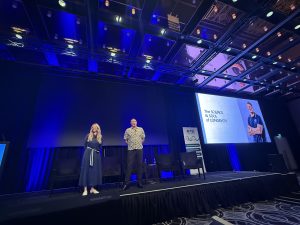
Key Insights from CMA 2025: The Science and Soul of Longevity
Presented by Dr Denise Furness (PhD) & Trevor Hendy AM
Complementary Medicines Australia Annual Conference & Awards
Ageing well is no longer defined by lifespan, but by healthspan: the quality of energy, clarity and vitality we bring to each stage of life.
At the Complementary Medicines Australia (CMA) Annual Conference 2025, Dr Denise Furness PhD and former Ironman Trevor Hendy AM delivered one of the most engaging sessions of the conference, bringing together genetics, mitochondrial science, lifestyle insights and lived experience to explore how we can age with resilience and purpose.
Below is a synthesis of the session’s key themes:
1. Stress & the Nervous System Directly Influence Mitochondrial Function
Chronic stress and sustained sympathetic activation reduce mitochondrial efficiency, elevate oxidative stress and impair cellular repair—each contributing to accelerated biological ageing.
Supporting the parasympathetic system through restorative practices, balanced lifestyle habits and meaningful connection has measurable effects on recovery, resilience and cellular energy.
2. Epigenetics Shows That Environment Shapes Healthspan
Drawing on two decades of research in nutrigenomics, Dr Furness highlighted that while DNA provides a blueprint, our nutrition, stress levels, sleep and environment play a much more significant role in how genes are expressed.
Epigenetic pathways are closely linked to mitochondrial function, making targeted nutrition a cornerstone of longevity-focused health strategies.
3. The Mindset Shift: From Perfectionism to Acceptance
Trevor Hendy shared how performance-driven mindsets often activate the sympathetic nervous system, increasing physiological load.
Moving toward acceptance supports calmer nervous system activity, more efficient energy use and better recovery—reinforcing the interplay between mindset, cellular energy and wellbeing.
4. Mitochondrial Decline Is a Hallmark of Ageing—and a Modifiable One
Mitochondria underpin energy production, cognitive function, muscle strength and cellular repair.
Age-related mitochondrial decline contributes to fatigue, reduced performance, cognitive slowing and slower recovery.
Supporting mitochondrial efficiency is therefore central to extending healthspan.
5. Ubiquinol Plays a Clinically Supported Role in Healthy Ageing
Dr Furness outlined why Ubiquinol is increasingly recognised in longevity-focused formulations:
- Enhances mitochondrial energy production
- Reduces oxidative stress
- Supports cardiovascular and cognitive function
- Helps maintain muscle performance
- Contributes to cellular resilience across the lifespan
These actions position Ubiquinol as a foundational nutrient in healthy ageing protocols and formulations.
6. Longevity Requires Both Science and Purpose
A recurring theme from the session:
Science provides the mechanisms; purpose and connection provide the foundation.
True longevity blends biological optimisation with lifestyle, mindset and meaning.
The strongest outcomes emerge when physiology and lived experience are addressed together.
Takeaways for Practitioners & Brandholders
- Mitochondria are central to energy, performance and healthy ageing.
- Lifestyle and nervous system balance significantly influence cellular resilience.
- Epigenetics provides a powerful framework for personalised health.
- Ubiquinol offers a scientifically supported foundation for longevity formulations.
- Future health solutions must integrate both biological and behavioural dimensions.
Continue Exploring the Science
For more research, insights and educational resources on mitochondrial health and Ubiquinol: